
Please note: This site contains links to websites not controlled by the Australian Government or ESA. Read more in the Terms of Use.
Multiplication inequalities inquiry
This prompt begins with a statement involving inequalities and the order of a set of digits. Students form questions based on the conjecture and investigate their questions. The resource includes the prompt, teacher notes, guided questions and extension prompts.
- Resource details
- Year level
- Year 5
- Purpose
- Assessment tasks Student activities Teaching resource
- Strand
- Number
- Topic
- Multiplication and division
- Audience
- Teachers
- Format
- Downloadable resource
- Australian Curriculum code
- AC9M5N06
- Numeracy progression
- Multiplicative strategies (P7)
- Publisher
- Inquiry Maths
- Copyright
- © Andrew Blair 2012-21. Creative Commons BY-NC-SA 4.0.
- Keywords
- product order of operations
Related resources
-

Multiplication: 2 digit by 2 digit numbers video
Use this video to explore multiplicative strategies, methods and models to solve a given worded problem.
Resource details -

Fractions as division video
Use this video as a springboard to explore multiplicative thinking using fractions, and to apply that thinking to sharing anything when there is not a whole number answer, drawing on reasoning.
Resource details -
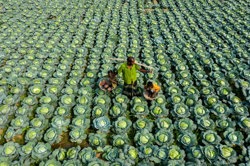
Patterns and number facts: Year 5 – planning tool
This planning resource for Year 5 is for the topic of Patterns and number facts.
Resource details -
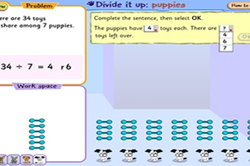
Divide it up: Puppies
Share items equally.
Resource details -
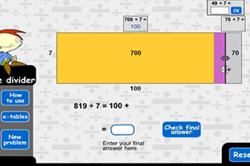
The divider: With or without remainders
Solve division problems.
Resource details -
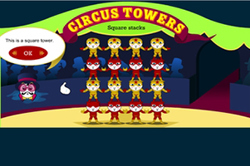
Circus towers: Square stacks
Learn about square numbers.
Resource details -
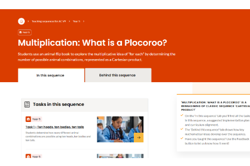
Multiplication: What is a Plocoroo?
In this sequence of two tasks, students use an animal flip book to explore the multiplicative idea of 'for each' by determining the number of possible animal combinations, represented as a Cartesian product.
Resource details -
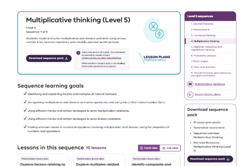
Multiplicative thinking (10 lessons)
In this sequence of 10 lessons, students model and solve multiplication and division problems using arrays, number lines, function machines, area models, and real-world contexts.
Resource details