
Collect, sort and compare data: Year 8 – planning tool
This planning resource for Year 8 is for the topic of Collect, sort and compare data. Students examine different techniques for collecting types of data and begin to consider the challenges of collecting representative data by sampling a population.
- Resource details
- Year level
- Year 8
- Purpose
- Planning Teaching resource Teaching strategies Student activities
- Strand
- Statistics
- Topic
- Data representation and interpretation
- Audience
- Teachers
- Format
- Webpage
- Australian Curriculum code
- AC9M8ST01
- Numeracy progression
- Interpreting and representing data (P7)
- Publisher
- Commonwealth of Australia
- Copyright
- © 2023 Commonwealth of Australia, unless otherwise indicated. Creative Commons Attribution 4.0, unless otherwise indicated
- Other terms
- lesson plans assessment task teaching strategies pedagogies Australian Curriculum learning from home misconceptions
Related resources
-
Data representations (Year 8)
Types of data and variation across data sets.
Resource details -
Increasing sample size
This video resource compares the reliability of a smaller sample size compared to a larger sample size of a population.
Resource details -
Statistical analysis: Year 8 – planning tool
This planning resource for Year 8 is for the topic of Statistical analysis.
Resource details -
Interpret and discuss data displays: Year 8 – planning tool
This planning resource for Year 8 is for the topic of Interpret and discuss data displays.
Resource details -
Statistics and probability
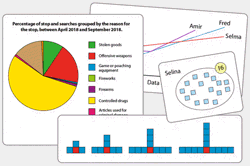
These units explore the relationship between probability and the way data is represented.
Resource details -
Educational Datasets
These teacher guides describe the datasets for teachers and provide a range of lesson activities for students in Years 3 to 10. Datasets are grouped according to where the data's context fits into learning areas of the Australian Curriculum.
Resource details -
Awareness of outliers
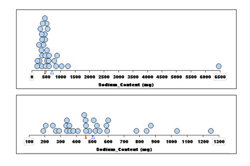
Students graph data about sodium content in foods and compare the statistics with and without the outlier value.
Resource details