
Follow and create algorithms: Year 3 – planning tool
This planning resource for Year 3 is for the topic of Follow and create algorithms. Students create and follow algorithms involving a short sequence of steps to generate number patterns. They use digital tools such as spreadsheets and calculators to explore algorithms with larger sets of numbers. Students identify any patterns generated and describe and explain them.
- Resource details
- Year level
- Year 3
- Purpose
- Planning Teaching resource Teaching strategies Student activities
- Strand
- Number
- Topic
- Computational thinking Algorithms
- Audience
- Teachers
- Format
- Webpage
- Australian Curriculum code
- AC9M3N07
- Numeracy progression
- Number patterns and algebraic thinking (P3)
- Publisher
- Commonwealth of Australia
- Copyright
- © 2023 Commonwealth of Australia, unless otherwise indicated. Creative Commons Attribution 4.0, unless otherwise indicated
- Other terms
- lesson plans assessment task teaching strategies pedagogies Australian Curriculum learning from home misconceptions
Related resources
-
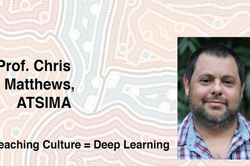
Episode 38: Making a Connection to Culture
This podcast episode features Professor Chris Matthews talking about the connection between mathematics and Aboriginal culture.
Resource details -
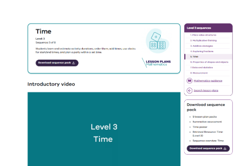
Time (9 lessons)
In this sequence of 9 lessons, students learn and estimate activity durations, order them, add times, use clocks for start/end times, and plan a party within a set time.
Resource details -
Reading and navigating through songlines
Students explore the interplay between songlines and the land, understanding how these knowledge systems facilitate navigation, trade, ceremony, and social interaction.
Resource details -
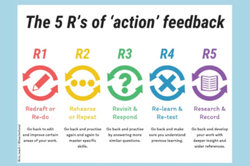
Dylan Wiliam – collaborative learning
In this video Dylan Wiliam discusses the power of collaborative learning.
Resource details -
Statistics: How far can we jump?
Statistics: How far can we jump?
Resource details -
Multiplication sequence - Level 2, 3, 4, 5, 6
Multiplication sequence - Level 2, 3, 4, 5, 6
Resource details -
Parent and carer support
View these tips to support your child’s learning in mathematics.
Resource details -
Mathematics Year 2 – ACARA
View work samples and related tasks for assessment guidance for Mathematics Year 2.
Resource details