
Please note: This site contains links to websites not controlled by the Australian Government or ESA. Read more in the Terms of Use.
Transforming tasks strategy: From procedure to problem solving
Tasks are presented as following a ‘before and after’ approach, demonstrating how to move from a procedural approach to posing questions that incorporate more of a problem-solving approach. A reflection of why and how provides rationale and benefits for student learning.
- Resource details
- Year level
- Foundation Year 1 Year 2 Year 3 Year 4 Year 5 Year 6 Year 7 Year 8 Year 9 Year 10
- Purpose
- Professional learning Teaching strategies
- Audience
- Teachers School leaders
- Format
- Downloadable resource
- Publisher
- South Australian Department for Education
- Copyright
- © Government of South Australia. Free-for-education material.
- Keywords
- problem solving
- Other terms
- questioning
Related resources
-
Episode 38: Making a Connection to Culture
This podcast episode features Professor Chris Matthews talking about the connection between mathematics and Aboriginal culture.
Resource details -
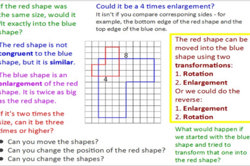
Enlargement
To enlarge and transform geometrical shapes.
Resource details -
FISO case study – smooth transitions at Bass Valley Primary School
A case study of a program implemented to address low-level literacy and numeracy skills.
Resource details -
Dylan Wiliam – collaborative learning
In this video Dylan Wiliam discusses the power of collaborative learning.
Resource details -

Pyramid inquiry
Using rules to determine the area, perimeter and height of pyramids, while also becoming aware of the features of pyramids.
Resource details -
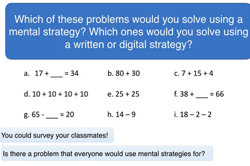
Which would you do in your head?
This video examines different ways of solving addition and subtraction problems.
Resource details -
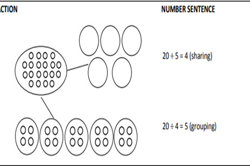
How many clumps?
This series of lessons develops students' skills, knowledge and processes of multiplicative thinking, incorporating a First Nations perspective.
Resource details -
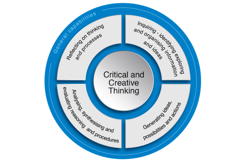
Critical and creative thinking
This resource describes key ideas for critical and creative thinking that are organised into four interrelated elements in the learning continuum.
Resource details