
Please note: This site contains links to websites not controlled by the Australian Government or ESA. Read more in the Terms of Use.
The humanoid project
In this unit of lessons, students explore the difference between continuous and discrete variables. They summarise a large set of data values using measures of centre (mean, median and mode) and measures of spread (range). Through this, students learn that statistics are meaningful when applied to summarise large data sets.
- Resource details
- Year level
- Year 7 Year 8 Year 9
- Purpose
- Teaching resource Student activities
- Strand
- Probability Statistics
- Topic
- Data representation and interpretation
- Audience
- Teachers
- Format
- Downloadable resource
- Numeracy progression
- Interpreting and representing data (P5, P8)
- Publisher
- Queensland University of Technology
- Copyright
- © Queensland University of Technology. Creative Commons BY-NC-SA 4.0.
- Keywords
- survey mode median mean data range
- Other terms
- YuMi Deadly
- File type
- File size
- 0.5 MB
Related resources
-
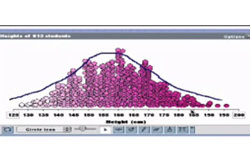
Increasing sample size
This video resource compares the reliability of a smaller sample size compared to a larger sample size of a population.
Resource details -
Represent collected data: Year 9 – planning tool
This planning resource for Year 9 is for the topic of Represent collected data.
Resource details -
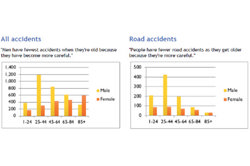
Statistical analysis: Year 9 – planning tool
This planning resource for Year 9 is for the topic of Statistical analysis.
Resource details -
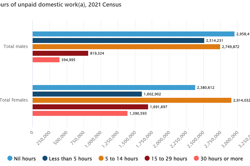
Interpret and discuss data displays: Year 9 – planning tool
This planning resource for Year 9 is for the topic of Interpret and discuss data displays.
Resource details -
Collect, sort and compare data: Year 9 – planning tool
This planning resource for Year 9 is for the topic of Collect, sort and compare data.
Resource details -
Statistical analysis: Year 8 – planning tool
This planning resource for Year 8 is for the topic of Statistical analysis.
Resource details -
Collect, sort and compare data: Year 8 – planning tool
This planning resource for Year 8 is for the topic of Collect, sort and compare data.
Resource details -
Interpret and discuss data displays: Year 8 – planning tool
This planning resource for Year 8 is for the topic of Interpret and discuss data displays.
Resource details