
Please note: This site contains links to websites not controlled by the Australian Government or ESA. Read more in the Terms of Use.
Prism nets
In this activity students can ‘unwrap’ the net of a prism and turn it to view from different perspectives.
- Resource details
- Year level
- Year 7
- Purpose
- Teaching resource
- Strand
- Measurement
- Topic
- Shapes and objects Transformation
- Audience
- Teachers
- Australian Curriculum code
- AC9M7SP01
- Numeracy progression
- Positioning and locating (P5)
- Publisher
- GeoGebra
- Copyright
- © 2022 GeoGebra. Free-for-education material.
- Keywords
- three-dimensional reasoning
- Other terms
- GeoGebra
Related resources
-
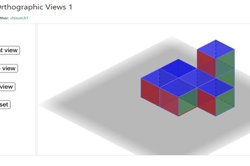
Orthographic views
Views of a three-dimensional object from different directions.
Resource details -

Geometric drawing
This resource provides detailed explanations of the curriculum content, worked examples and assessment questions related to drawing representations of solid objects.
Resource details -
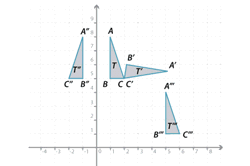
Transformations of the plane
This resource focuses on transformations of the plane and gives detailed explanations for teachers and students of the curriculum content, worked examples and assessment questions.
Resource details -
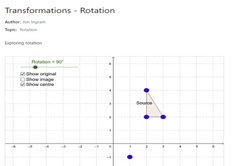
Transformations: Rotation
This resource allows students to see the effect of rotation of a triangle on a Cartesian plane. You can adjust the position of the centre of rotation.
Resource details -
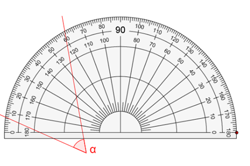
Shapes and objects: Year 7 – planning tool
This planning resource for Year 7 is for the topic of Shapes and objects.
Resource details -
Transformation: Year 7 – planning tool
This planning resource for Year 7 is for the topic of Transformation.
Resource details -

Syllabus BITES
Syllabus BITES contains a series of modules that introduces transformations in the coordinate plane. Each module focuses on a different transformation – translation, rotation, reflection and combinations.
Resource details -

Making triangles
Students study the concept of triangle inequality, which determines if three positive numbers can serve as the side lengths of a triangle. This principle states that a triangle is possible if the largest of the three numbers is smaller than the sum of the other two. To explore this, students experiment with various combinations of three natural numbers.
Resource details