
Please note: This site contains links to websites not controlled by the Australian Government or ESA. Read more in the Terms of Use.
Fuel for thought
In this task, students compare the height of the liquid in a container with the amount of liquid.
- Resource details
- Year level
- Year 5
- Purpose
- Teaching resource Student activities
- Strand
- Measurement
- Topic
- Mass and capacity Area, volume and surface area
- Audience
- Teachers
- Format
- Webpage
- Australian Curriculum code
- AC9M5M01
- Numeracy progression
- Understanding units of measurement (P8)
- Publisher
- New Zealand Ministry of Education
- Copyright
- © New Zealand Ministry of Education. Creative Commons BY 3.0 NZ.
Related resources
-
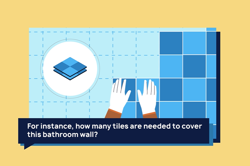
Area and perimeter video
Use this video to connect area and perimeter to real world applications to set the context for why we are learning about area and perimeter.
Resource details -
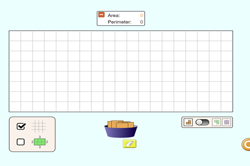
Area builder
Use this interactive tool to explore the relationship between area and perimeter.
Resource details -
Lengths and areas
Use the student resources to enable students to self-check answers to length, area and perimeter problems.
Resource details -
Spaced out
This unit explores the volume (in cubic units) of skyscraper constructions. Students investigate the most efficient way to pack cuboids in a confined space, and the relationship between millilitres and cubic centimetres.
Resource details -
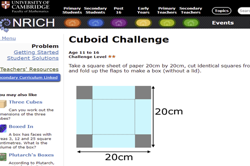
Cuboid challenge
This task enables students to practise visualising 2D representations of 3D shapes and make volume calculations.
Resource details -
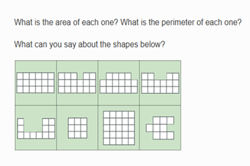
Investigate: Area and perimeter
This problem offers opportunities for students to consolidate their understanding of area and perimeter.
Resource details -
Numerically equal
This problem requires students to consider area and perimeter at the same time and to know the difference between the two.
Resource details -
Area and perimeter: Year 5 – planning tool
This planning resource for Year 5 is for the topic of Area and perimeter.
Resource details