
Please note: This site contains links to websites not controlled by the Australian Government or ESA. Read more in the Terms of Use.
reSolve: Authentic problems – Target Ball
This sequence of four lessons explores the relationship between an informal unit of measure and what is being measured using the context of designing a game of 'Target Ball'. Students work in groups to collect data on how far their chosen ball rolls, using a cut-out foot as an informal unit of measure. They represent and interpret their data and then work towards using formal units to make their game 'fair'. Each lesson is outlined in detail including curriculum links, vocabulary, materials needed, sample answers, discussion points and student resources. This sequence is part of the reSolve: Mathematics by Inquiry special topic 'Authentic Problems'.
- Resource details
- Year level
- Year 1 Year 2
- Purpose
- Teaching resource
- Strand
- Number Measurement Statistics
- Topic
- Operating with number Using units of measurement Length Data representation and interpretation
- Audience
- Teachers
- Format
- Downloadable resource
- Numeracy progression
- Number and place value (P4) Understanding units of measurement (P3) Interpreting and representing data (P2) Counting processes (P3)
- Publisher
- reSolve Maths by Inquiry
- Copyright
- © Australian Government Department of Education, Skills and Employment 2021. Creative Commons BY-NC-SA 4.0.
- Keywords
- data displays length informal units
- Other terms
- positive integers
Related resources
-
Informal measurement - Level 1
Informal measurement - Level 1
Resource details -
Multiplicative thinking - Level 2
Multiplicative thinking - Level 2
Resource details -
Multiplication sequence - Level 2, 3, 4, 5, 6
Multiplication sequence - Level 2, 3, 4, 5, 6
Resource details -
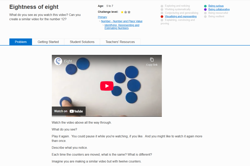
Eightness of eight
View this video and use the number 8 as an example to explore different representations. Then, ask students to choose a number—such as 12, 15, or 18—and represent it in various ways using physical materials, following the approach demonstrated in the video.
Resource details -

Teaching measurement: Early stage 1 – stage 1
Use page 12 of this guide to conduct assessments on measurement topics through individual questioning of a small group of students.
Resource details -
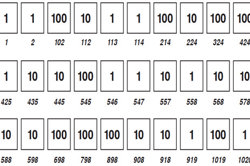
reSolve: Place value cards
Two inquiry-based lessons exploring place value and different ways to represent numbers.
Resource details -
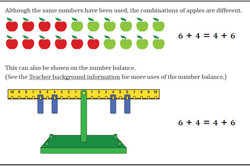
reSolve: Addition – partitioning
Two inquiry-based lessons exploring algebraic thinking and partitioning.
Resource details -
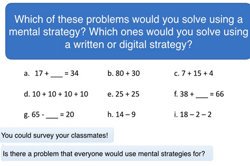
Which would you do in your head?
This video examines different ways of solving addition and subtraction problems.
Resource details