
Possible outcomes: Year 7 – planning tool
This planning resource for Year 7 is for the topic of Possible outcomes. Students represent the probability of an event occurring on a scale of zero to one as decimals, fractions or percentages.
- Resource details
- Year level
- Year 7
- Purpose
- Planning Teaching resource Teaching strategies Student activities
- Strand
- Probability
- Topic
- Chance and probability
- Audience
- Teachers
- Format
- Webpage
- Australian Curriculum code
- AC9M7P01
- Numeracy progression
- Understanding chance (P5)
- Publisher
- Commonwealth of Australia
- Copyright
- © 2023 Commonwealth of Australia, unless otherwise indicated. Creative Commons Attribution 4.0, unless otherwise indicated
- Other terms
- lesson plans assessment task teaching strategies pedagogies Australian Curriculum learning from home misconceptions
Related resources
-
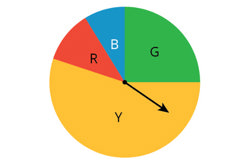
Conduct chance experiments: Year 7 – planning tool
This planning resource for Year 7 is for the topic of Conduct chance experiments.
Resource details -
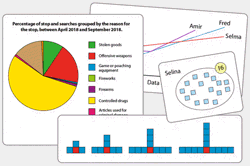
Statistics and probability
These units explore the relationship between probability and the way data is represented.
Resource details -
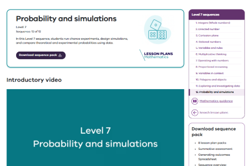
Probability and simulations (8 lessons)
In this sequence of 8 lessons, students run chance experiments, design simulations, and compare theoretical and experimental probabilities using data.
Resource details -
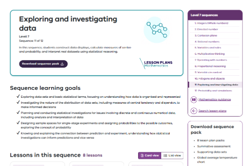
Exploring and investigating data (8 lessons)
In this sequence of 8 lessons, students construct data displays, calculate measures of centre and probability, and interpret real datasets using statistical reasoning.
Resource details -
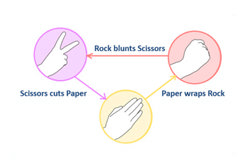
Rock, paper, scissors
In this lesson, students compare theoretical and experimental probabilities by completing repeated trials of the game ‘Rock, paper, scissors.’
Resource details -

Rock, paper … lizard, Spock?
In this lesson, students compare theoretical and experimental probabilities by completing repeated trials of the game ‘Rock, paper, scissors’ and its extension to include lizard and Spock.
Resource details -
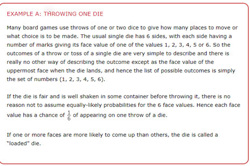
Chance (Year 7)
Examining the meaning of equally-likely outcomes.
Resource details