
Please note: This site contains links to websites not controlled by the Australian Government or ESA. Read more in the Terms of Use.
Mathematical modelling: Screentime footprint
Students use linear models to explore how screen time impacts carbon emissions, analysing personal digital footprints and predicting future impact.
- Resource details
- Year level
- Year 8
- Purpose
- Teaching resource
- Strand
- Statistics Measurement Algebra
- Topic
- Mathematical modelling
- Audience
- Teachers
- Format
- Webpage
- Numeracy progression
- Interpreting and representing data (P7) Proportional thinking (P6) Interpreting fractions (P9)
- Publisher
Australian Academy of Science
- Copyright
© 2026 Australian Academy of Science. Creative Commons BY-NC-SA 4.0.
Related resources
-

Mathematics, moon phases, and tides
Explore how Aboriginal and Torres Strait Islander Peoples use knowledge of the Moon and tides to understand and care for Country.
Resource details -
Mathematical modelling (Measurement): Year 8 – planning tool
This planning resource for Year 8 is for the topic of Mathematical modelling.
Resource details -
Mathematical modelling (Number): Year 8 – planning tool
This planning resource for Year 8 is for the topic of Mathematical modelling.
Resource details -
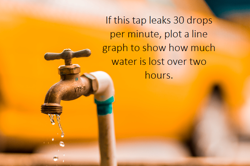
Mathematical modelling (Algebra): Year 8 – planning tool
This planning resource for Year 8 is for the topic of Mathematical modelling.
Resource details -

Shooting 3-pointers: Part 1
This lesson, split into two parts, gives students the opportunity to participate in a real-life problem both in and out of the classroom. Students are guided through the process of formulating a problem that can be solved using a mathematical modelling approach.
Resource details -
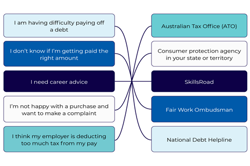
Different ways to pay
Students learn about the pros and cons of various payment options, what happens to their money, different consumer products and where to go for more information.
Resource details -
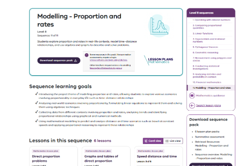
Modelling – proportion and rates (6 lessons)
In this sequence of 6 lessons, students explore proportion and rates in real-life contexts, model time–distance relationships, and use algebra and graphs to describe and solve problems.
Resource details