
Egg roulette
This video shows two teachers playing a game of egg roulette, taking it turns to smash eggs on their heads. The problem is three are raw and the remainder are cooked. This is a fun demonstration of a game of chance without replacement. This video relates to the Year 9 probability lesson: Egg roulette: Part 1 whereby students use probabilistic reasoning to assign probabilities and solve conditional probability problems using two tables.
- Resource details
- Year level
- Year 9
- Purpose
- Teaching resource
- Strand
- Probability
- Topic
- Chance and probability
- Audience
- Teachers Students
- Format
- Video
- Numeracy progression
- Understanding chance (P6)
- Publisher
- Education Services Australia
- Copyright
- © Education Services Australia. Creative Commons BY 4.0.
- Keywords
- conditional probability
- Other terms
- compound events
Related resources
-
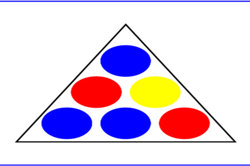
Probability inquiry
This prompt explores the probability of chosing a ball of a given colour.
Resource details -
Possible outcomes: Year 9 – planning tool
This planning resource for Year 9 is for the topic of Possible outcomes.
Resource details -
Probability calculations: Year 9 – planning tool
This planning resource for Year 9 is for the topic of Probability calculations.
Resource details -
Conduct chance experiments: Year 9 – planning tool
This planning resource for Year 9 is for the topic of Conduct chance experiments.
Resource details -
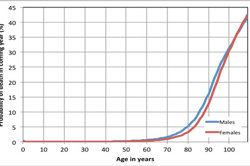
reSolve: Mathematical modelling – how risky is life?
This is a series of inquiry-based lessons about modelling the risk of death by various causes, using probability, statistics and proportional thinking.
Resource details -
Egg roulette: Part 1
Smashing good fun learning about probability without replacement, by playing and exploring the game of egg roulette – 12 eggs, 3 raw and 9 cooked. Contestants take it in turns to choose an egg and smash it on their head, hoping to avoid the 3 raw eggs!
Resource details -
Probability (7 lessons)
In this sequence of 7 lessons, students explore independent and compound events through two-way tables, tree diagrams and conducting simulations.
Resource details